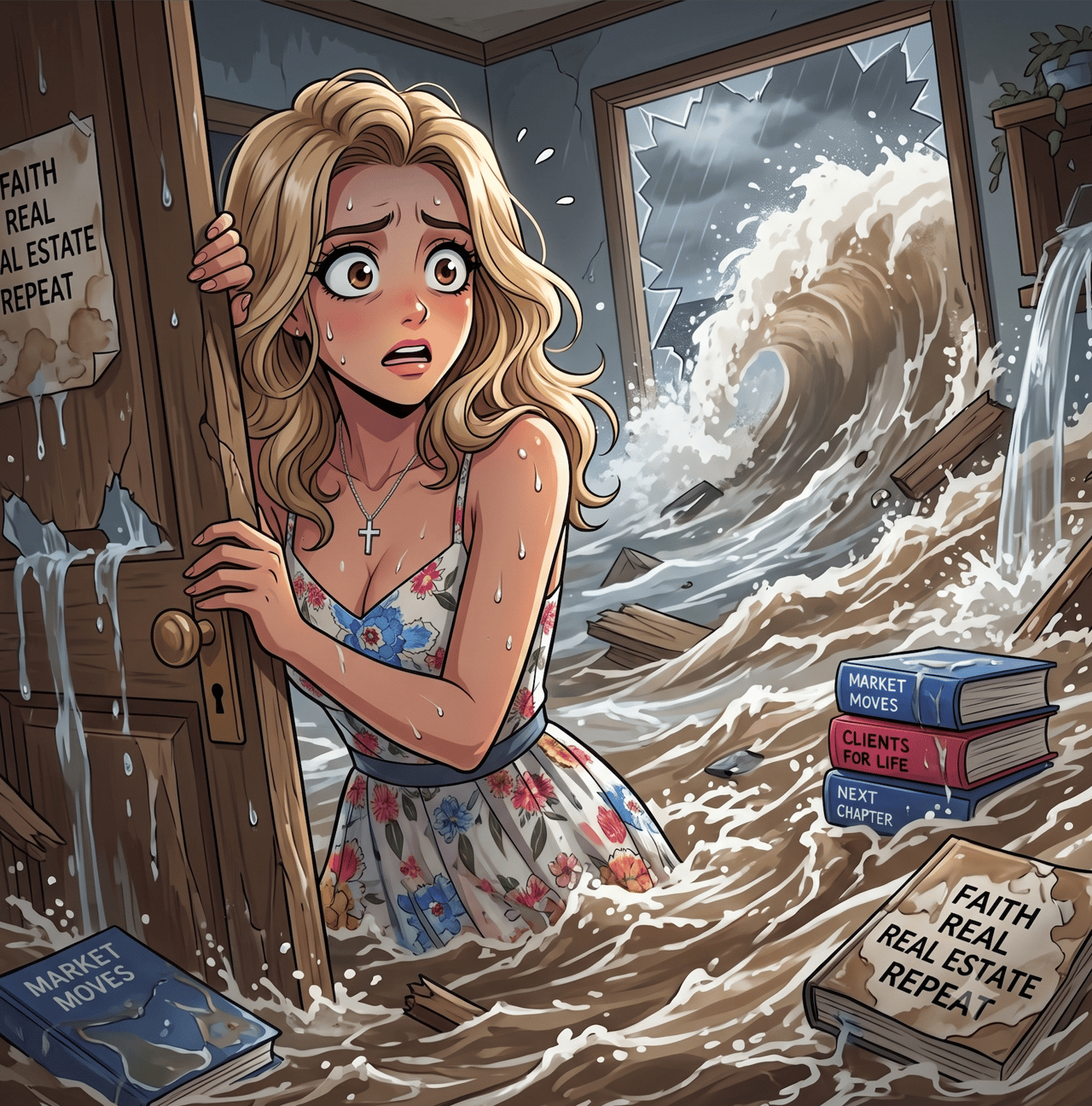
The Basement That Flooded Ten Days After Closing, and What It Means for Every NJ Seller Now
Do New Jersey sellers have to disclose flood risk when selling a home? Yes. Since March 20, 2024, every New Jersey seller must disclose flood zone status and known flood history in writing, before a buyer is legally bound to the contract, and "as is" language does not remove that duty.
Ten days. That's how long it took for a basement in New Jersey to flood after a closing. The buyer had asked the seller directly about water in the basement. The seller said he'd never had a problem. Seven floods and one lawsuit later, a court sided with the buyer, even though the seller had technically disclosed a working sump pump on the form.
That case is small in dollar terms. It's not the kind of ruling that makes headlines. But it's exactly the kind of story every seller in Hunterdon, Somerset, Morris, Monmouth, Mercer, and Warren Counties should hear before they list, because it shows what New Jersey courts actually look at when a disclosure dispute lands in front of a judge. And as of 2024, the rules around what you have to say upfront got a lot more specific.
Why New Jersey Tightened This Law in the First Place
New Jersey has faced a string of major storms over the past several years, and flash flooding has started showing up in areas with no history of water problems at all. A lot of that comes down to development outpacing infrastructure, with aging or undersized sewer and stormwater drainage systems across the state struggling to handle rainfall that would have drained fine a generation ago.
That matters for you as a seller because a property with no flood history five years ago isn't automatically a property with no flood risk today. It's exactly the gap the state set out to close.
What the 2024 Flood Disclosure Law Actually Requires
Before March 20, 2024, New Jersey sellers relied mostly on general "you can't hide a known defect" case law and their own honesty. That standard still applies, but it's no longer the whole story.
As of that date, New Jersey's Flood Disclosure Law requires every seller of real property, residential or commercial, to disclose flood-risk information in writing before a buyer becomes obligated under a purchase contract. The form that carries this requirement is the Seller's Property Condition Disclosure Statement, and NJ Realtors confirms the updated version is already built into standard paperwork statewide. It now asks sellers directly whether the property sits in a FEMA Special Flood Hazard Area or Moderate Risk Flood Hazard Area, and whether the seller has actual knowledge of prior flooding, flood damage, or flood insurance requirements.
Two details about this form are worth knowing. In the past, it wasn't required for estate sales or for sellers who had never personally resided in the property, so those transactions used to slip through without it. And even now, this disclosure statement has never been part of the contract of sale itself. It's a separate document, which is exactly why it's easy for a seller to underestimate how much weight it carries.
The Legal Standard That Was Already There
The 2024 law didn't invent the idea that sellers have to be honest. It gave a decades-old legal standard a specific, written form.
New Jersey has long required sellers to disclose known, non-obvious defects, built on two cases. Weintraub v. Krobatsch established that a seller can't stay silent about a hidden material defect. Strawn v. Canuso extended that duty to on-site conditions a buyer couldn't reasonably discover on their own. Together, they set the rule that "as is" language protects a seller from what they didn't know, not from what they did.
That's the standard the basement flood case tested directly.
What Happened in Battaglia v. Aversa
That case is Battaglia v. Aversa, an unpublished New Jersey Appellate Division decision from September 2023. A buyer's basement flooded within days of closing and continued flooding seven times before drainage work was installed. The seller had told the buyer he'd never had a water problem, despite prior owners' knowledge suggesting otherwise.
The appellate court affirmed the ruling in the buyer's favor, reinforcing that a seller's disclosure statement has to be truthful, and that a buyer is entitled to rely on it, even in an "as is" sale. It wasn't the flooding itself that created liability. It was the gap between what the seller knew and what the seller said.
You don't need to be a hydrologist to sell your home responsibly. You just need to say what you actually know.
What This Means If You're Selling This Year
Violations of the flood disclosure requirements can carry real consequences, including civil penalties, rescission risk, and potential claims under the Consumer Fraud Act. None of that is meant to scare you into silence. It's meant to do the opposite. A seller who documents flood history honestly, with dates and repairs, is in a far stronger position than one who hopes it never comes up.
If you've had water in a basement, crawl space, or yard, even something minor that you handled yourself, that's the kind of thing courts have already shown they take seriously. Painting over a water line, staying quiet because a buyer "probably won't notice," or assuming a repair erases the history are all risks that can follow a sale well past the closing table.
Before you list, walk your property with fresh eyes, check whether it falls in a FEMA flood zone, and gather any records of past water issues and the repairs made. That single step protects your closing far more than any staging decision will.
It also helps to know that buyers today aren't only relying on what a seller discloses. Through CompassOne and Collections, every listing includes a flood risk filter buyers can check for themselves, right alongside the seller's disclosure. Buyers have more ways than ever to verify what they're being told, which is one more reason it doesn't pay to leave anything out.
Frequently Asked Questions
Does "as is" protect a New Jersey seller from flood disclosure requirements? No. New Jersey courts have consistently held that "as is" language covers unknown conditions, not conditions the seller actually knew about, including flood history.
How do I find out if my property is in a FEMA flood zone before I list? The NJDEP's flood disclosure tool lets you search a property address to check its FEMA Special or Moderate Risk Flood Hazard status ahead of listing.
What happens if a seller doesn't disclose known flood history? It can expose the seller to civil penalties, contract rescission, and potential legal claims well after closing, as seen in recent New Jersey court decisions involving undisclosed water issues.
Before You List, Let's Walk Through It Together
If you're thinking about selling in Hunterdon, Somerset, Morris, Monmouth, Mercer, or Warren County, the best time to sort through disclosure questions like this is before your home ever hits the market, not after an offer is on the table. I'd be glad to sit down with you for a Strategy Call and walk through what your specific property history means for your disclosure paperwork.
Jennifer Stowe Founder, Apogee Real Estate Advisors at Compass