The Science of Why Empty Counters Sell Homes Faster
Do clear kitchen counters actually help a home sell faster? Yes. NAR's 2025 research shows the kitchen is one of the three most important rooms to buyers, and separate research on household clutter links cluttered counters directly to measurable increases in stress. A clear counter isn't just staging. It's a documented shift in how a space feels to live in and to walk through.
The Counter Is Doing More Than You Think
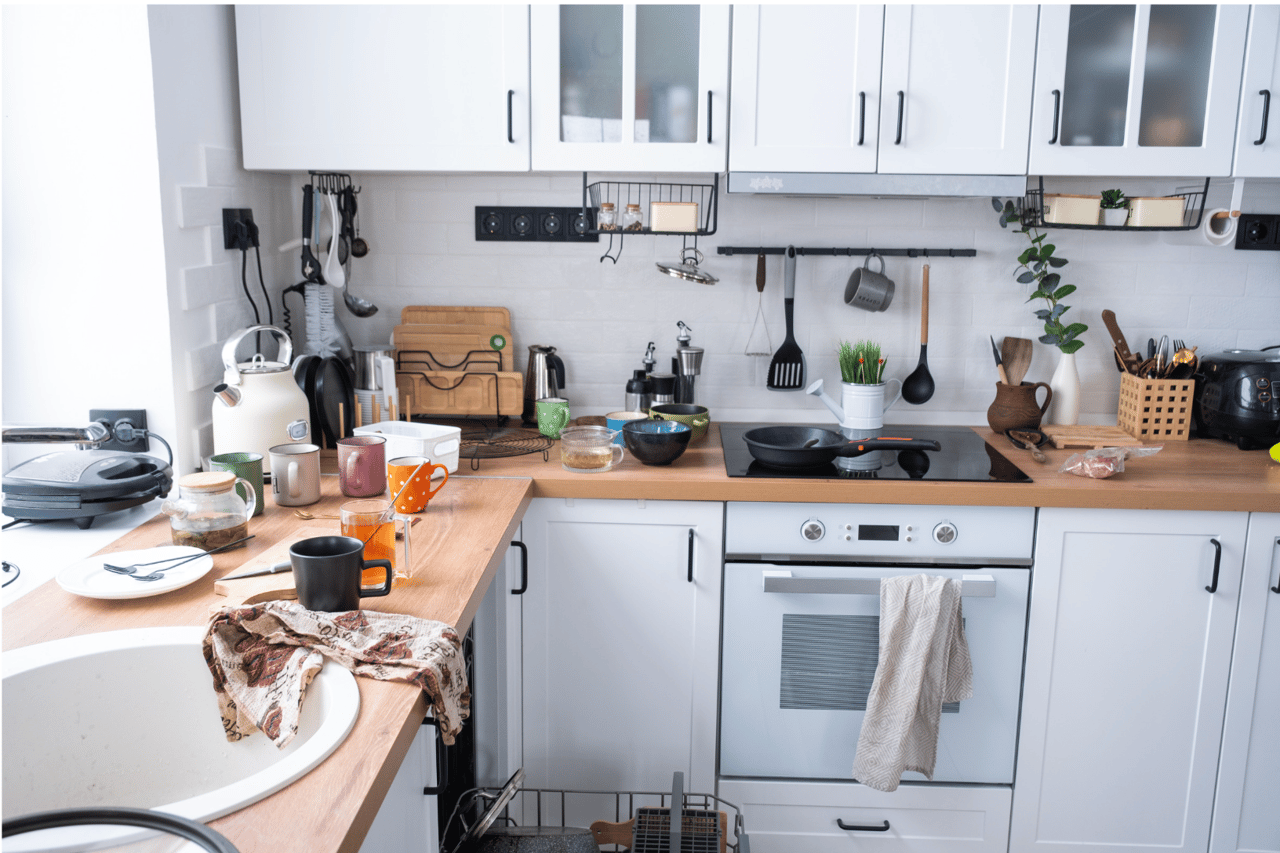
Stand in your kitchen right now and look at the counter. If it's covered in mail, half-used appliances, and the things you'll deal with "later," you're not imagining the weight of it. Researchers at UCLA studied dual-income households and found that people who described their homes as cluttered and full of unfinished tasks showed disrupted cortisol patterns throughout the day, a pattern linked to chronic stress. A separate 2022 survey by the National Association of Productivity and Organizing Professionals found that 80% of people say cluttered kitchen counters contribute directly to their daily stress.
That's not a coincidence of design preference. It's your nervous system responding to the room where you make dozens of small decisions a day, decisions about food, time, and what happens next.
Why This Shows Up So Strongly in the Kitchen Specifically
Every room in your home holds some visual clutter, but the kitchen carries a different kind of weight. It's the room you pass through first thing in the morning and the room you're standing in at the end of a long day, and Princeton neuroscience research on visual attention found that clutter competes directly for the brain's limited focus, forcing it to filter out competing objects before it can settle on anything else.
That filtering has a cost. It happens every single time you walk in, whether you notice it or not.
What Happens When the Counter Is Clear
Ask anyone who has cleared a counter down to nothing and left it that way for a week. The room doesn't just look different. It feels different to walk into. Coffee gets made without stepping around three other things first. Dinner prep doesn't start with a five-minute clearing project before the cooking even begins.
That shift, the one where your shoulders actually drop when you walk in, is the same shift a buyer experiences when they walk through your kitchen on a showing. The room isn't announcing everything you haven't gotten to yet. It's giving them room to imagine their own life there instead.
The Emotional Weight Doesn't Stay in the Kitchen. It Follows You Into the Deal.
Here's the part most people never connect. That stress doesn't stay contained to the room it started in. Research on chronic stress and financial decision-making, published in journals studying economic behavior, shows that sustained stress alters how the brain weighs choices. It pushes people toward short-term relief over long-term outcomes, a pattern researchers call steeper delay discounting, and it reduces the mental flexibility needed to stay patient through a decision that takes time to play out.
In plain terms, chronic stress doesn't just make you tired. It makes you more likely to grab the faster, smaller relief instead of holding out for the better outcome.
In a real estate transaction, that shows up in specific, expensive ways. A seller carrying that weight is more likely to accept the first offer instead of waiting for the right one. More likely to cave on a repair negotiation just to make it stop instead of asking whether the request is even fair. More likely to rush a pricing decision out of exhaustion rather than strategy.
None of that is a character flaw. It's a documented response to sustained stress, and it's exactly why the work of clearing the physical space matters before the transaction ever begins. A seller who has already done the work of lowering that daily weight walks into negotiations with more patience and a clearer read on what's actually fair, not just what will make the discomfort end fastest.
This is also where my own approach to negotiating comes in. I work off of facts, real repair estimates, real comparables, not guesses or pressure tactics from either side. But that only works fully when the seller themselves isn't negotiating from a place of exhaustion. Calming the home calms the decision-making that happens inside it.
What the Real Estate Data Confirms
This isn't only a wellbeing argument. It shows up directly in NAR's 2025 Profile of Home Staging, which surveyed 1,266 real estate professionals nationwide:
- 68% of sellers' agents said the kitchen was among the most commonly staged rooms, behind only the living room and primary bedroom
- 23% of buyers' agents said the kitchen was one of the top rooms buyers weighed most heavily when forming an impression of a home
- 29% of agents overall reported that staged homes received offers 1% to 10% higher than comparable unstaged listings
The kitchen isn't just a functional space buyers check off a list. It's one of the rooms most likely to shape whether they can picture themselves actually living there.
Why I Start Here With Sellers Who Feel Stuck
When a seller tells me their home isn't "ready" to list, the kitchen is often where that feeling lives loudest. It's the room with the most surfaces, the most small objects, and the most daily use, which also makes it the room most likely to feel out of control when life gets busy.
I don't come in with judgment or a checklist that makes the whole house feel like a project. We start with the counter. One clear surface, then the next, until the room itself feels different to stand in, not just to photograph. Most sellers tell me they notice the shift in how they feel at home before they ever notice the shift in how the listing photos turn out. Both matter, but the first one is the one that actually gets people to the point of listing at all.
Frequently Asked Questions
Why do cluttered counters cause stress? Research from UCLA on household environments found that people who described their homes as cluttered and unfinished showed disrupted cortisol patterns linked to chronic stress, and a 2022 NAPO survey found 80% of people connect cluttered counters directly to daily stress.
Does clearing the kitchen counter really help a home sell? Yes. NAR's 2025 research identifies the kitchen as one of the top three rooms buyers weigh most heavily, and staged homes overall saw offers land 1% to 10% higher than comparable unstaged listings.
Where should I start if my whole kitchen feels overwhelming? Start with one clear surface, usually the main counter. A single clear, functional space changes how the whole room feels to use, and it's the easiest place to build momentum before tackling cabinets or pantry space.
Can stress from a cluttered home actually affect financial decisions during a sale? Research on chronic stress and decision-making shows sustained stress pushes people toward short-term relief over better long-term outcomes and reduces patience for decisions that take time to play out. In a transaction, that can mean accepting a lower offer too quickly or caving on a repair negotiation just to end the discomfort, rather than holding out for a fair, well-timed outcome.
Ready to Feel the Difference in Your Own Kitchen?
If your kitchen has felt like one more thing on a list that never gets shorter, that's exactly where we start, one counter, one surface, one decision at a time. You'll likely notice the shift in how the room feels before a single buyer ever walks through it.
Book a Strategy Call with me today, and let's find out what your kitchen, and the rest of your home, is already capable of.
Jennifer Stowe Founder, Apogee Real Estate Advisors at Compass Serving Hunterdon, Somerset, Morris, Monmouth, Mercer, and Warren Counties, NJ